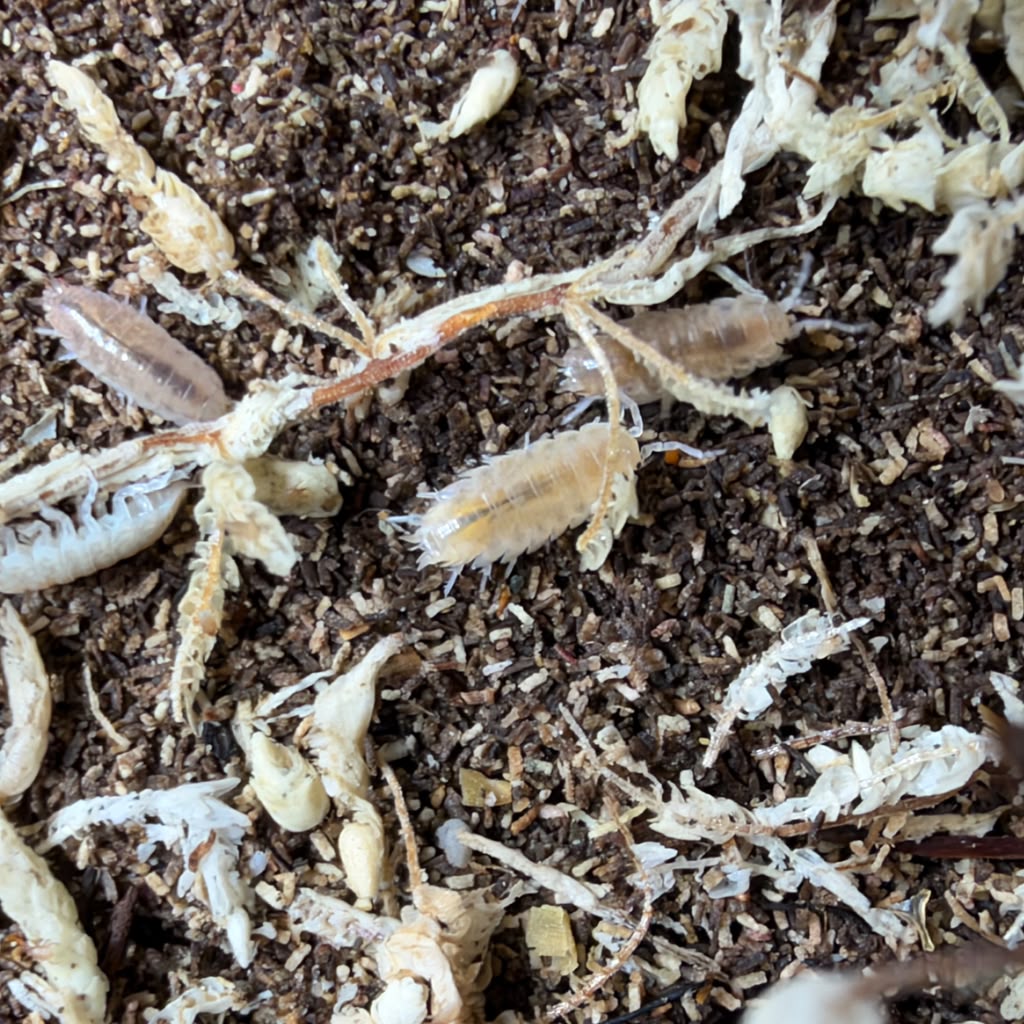
Niambia capensis 'African Cape'
Niambia capensis 'African Cape'
Couldn't load pickup availability
Niambia capensis ‘African Cape’ – Active Dwarf Isopods
Creation Cultivated Niambia capensis ‘African Cape’ is a small South African isopod valued for its active behavior and naturally varied cream, gray, brown, and muted-purple coloration.
African Cape isopods are larger and more visible than many subterranean dwarf species while remaining compact enough to work through leaf litter and tight spaces.
Their adaptable care and useful scavenging behavior make them an excellent choice for dedicated cultures and moderately humid bioactive enclosures.
Why Isopod Keepers Choose Creation Cultivated
Naturally Variable Color — Colonies may display cream, gray, brown, purple, and mixed tones.
Visible Dwarf Species — Larger and easier to observe than Dwarf White or Dwarf Purple isopods.
Active Cleanup Crew — Helps process leaf litter, decaying wood, leftover food, and organic waste.
Adaptable Care — Tolerates a broader moisture range than many tropical dwarf species.
Compact Adult Size — Suitable for smaller terrariums and detailed bioactive setups.
Professionally Packed — Carefully prepared for secure live-animal transit.
Product Details
Scientific Name: Niambia capensis
Common Name: African Cape Isopod
Origin: South Africa
Coloration: Cream, gray, brown, muted purple, or mixed
Adult Size: Approximately 0.2–0.35 in. (5–9 mm)
Care Level: Beginner
Reproduction Rate: Moderate once established
Behavior: Active, small-bodied, and frequently visible beneath cover
Natural differences in size, age, and coloration should be expected.
Care Requirements
Temperature: Approximately 72–80°F (22–27°C)
Moisture: Maintain a consistently moist retreat while allowing the remaining substrate to stay moderately damp to slightly dry.
Ventilation: Provide gentle to moderate cross-ventilation and avoid stagnant, saturated conditions.
Substrate: Use a nutrient-rich organic substrate containing decomposing hardwood leaves and rotting wood.
Diet: Provide abundant leaf litter with small portions of vegetables and supplemental protein.
Calcium: Keep cuttlebone, limestone, oyster shell, or another calcium source available.
Commonly Used For
African Cape isopods are commonly used in bioactive terrariums, planted enclosures, miniature display cultures, and dedicated breeding colonies.
They work best in setups that retain a moist refuge without remaining uniformly wet.
Our Commitment
Your satisfaction matters. If there is an issue with your order, contact us and our team will work to resolve it promptly and professionally.
Distinctive live isopods. Carefully raised. Professionally packed. Delivered directly to your door.
Disclaimer: Live animals. Not for human consumption. Never release isopods into the wild.
Share