MiceDirect
Cubaris sp. 'Orange Freezy'
Cubaris sp. 'Orange Freezy'
Couldn't load pickup availability
Cubaris sp. ‘Orange Freezy’ – Large Orange Tropical Isopods
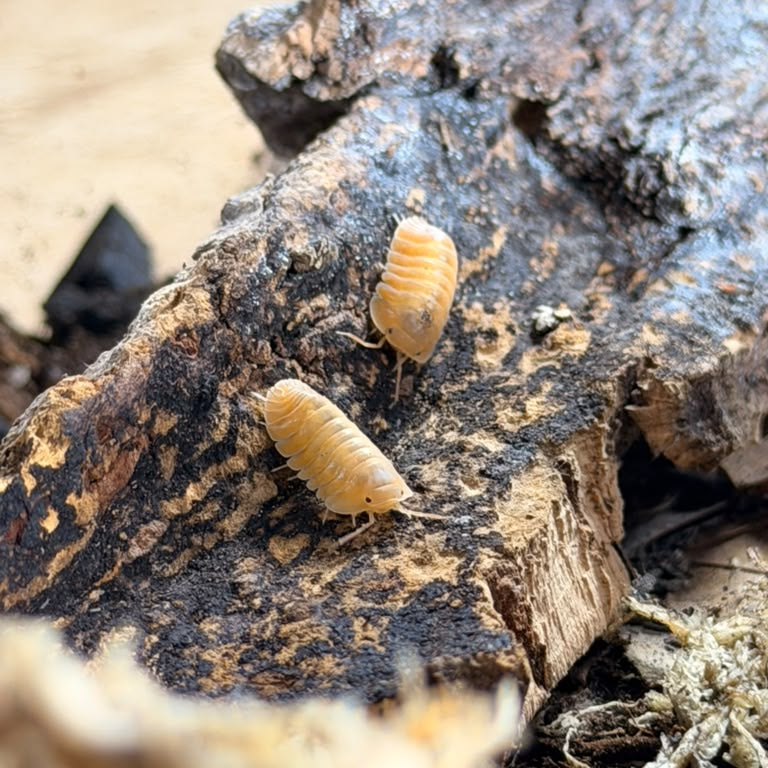
Creation Cultivated Cubaris sp. ‘Orange Freezy’ is a large tropical isopod recognized for its vibrant orange body and translucent, frosted-looking outer skirt.
This Thai hobby species combines bold coloration with a broad, rounded body. It is generally more active and reproduces more readily than many Rubber Ducky-type isopods.
Orange Freezy isopods are best suited for intermediate keepers who can provide consistently warm, humid, and stable conditions.
Why Isopod Keepers Choose Creation Cultivated
Vibrant Orange Color — Displays rich orange coloration that stands out against natural substrate and cork bark.
Frosted Outer Skirt — Semi-transparent edges create the distinctive appearance behind the Orange Freezy name.
Large Adult Size — One of the larger provisional Cubaris species maintained in the hobby.
Active Behavior — Generally more active than many slow-moving collector Cubaris.
Steady Reproduction — Produces at a moderate rate once properly established.
Professionally Packed — Carefully prepared for secure live-animal transit.
Product Details
Hobby Identification: Cubaris sp. ‘Orange Freezy’
Other Trade Name: Orange Freeze
Hobby Origin: Thailand
Coloration: Bright orange with translucent outer edges
Adult Size: Approximately 0.7–0.8 in. (18–20 mm)
Care Level: Intermediate
Reproduction Rate: Moderate once established
Natural differences in size, age, orange intensity, and skirt transparency should be expected.
Care Requirements
Temperature: Approximately 75–82°F (24–28°C)
Moisture: Maintain high humidity with a consistently moist retreat and a smaller moderately dry area.
Ventilation: Provide moderate airflow to prevent stagnant conditions while retaining humidity.
Substrate: Use a deep organic substrate containing decomposing hardwood, leaf litter, and sphagnum moss.
Diet: Provide abundant leaf litter with occasional vegetables and supplemental protein.
Calcium: Keep cuttlebone, limestone, or another calcium source available.
Commonly Used For
Orange Freezy isopods are commonly kept as display colonies, collector cultures, and long-term breeding projects in warm, humid environments.
Although they consume decaying material, their collector value makes them better suited for dedicated cultures than heavy cleanup-crew use.
Our Commitment
Your satisfaction matters. If there is an issue with your order, contact us and our team will work to resolve it promptly and professionally.
Distinctive live isopods. Carefully raised. Professionally packed. Delivered directly to your door.
Disclaimer: Live animals. Not for human consumption. Never release isopods into the wild.
Share