MiceDirect
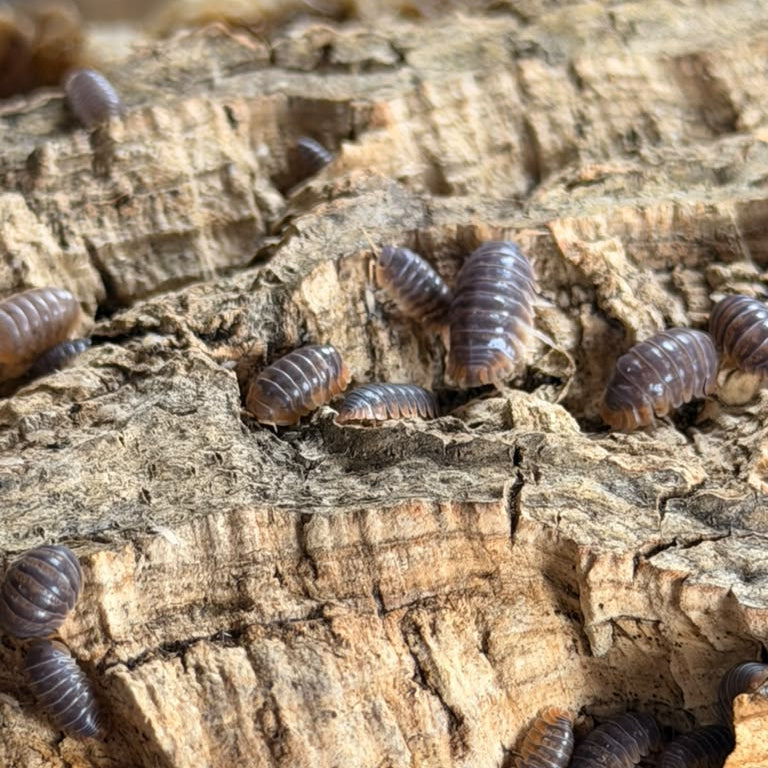
Cubaris sp. ‘Miyako’
Cubaris sp. ‘Miyako’
Couldn't load pickup availability
Cubaris sp. ‘Miyako’ – Japanese Red Edge Isopods
Creation Cultivated Cubaris sp. ‘Miyako’ is a striking Japanese isopod known for its dark charcoal-to-purple body framed by vivid red-orange edging.
Also sold under the names Japanese Red Edge and Iriomotensis Miyako, this collector species develops a contrasting colored skirt around the outer edges of its armored body segments.
Miyako isopods are best suited for intermediate keepers who can provide consistently warm, humid, and stable conditions.
Why Isopod Keepers Choose Creation Cultivated
Vivid Red Edging — Features red-to-orange markings that contrast beautifully against its darker body.
Japanese Hobby Line — A distinctive collector culture associated with Miyako, Japan.
Display-Worthy Appearance — Its contrasting colors make it an excellent centerpiece colony.
Classic Cubaris Shape — Possesses a compact, rounded body and can roll into a protective ball.
Collector Appeal — A less commonly available Japanese isopod with recognizable coloration.
Professionally Packed — Carefully prepared for secure live-animal transit.
Product Details
Hobby Identification: Cubaris sp. ‘Miyako’
Other Trade Names: Japanese Red Edge, Iriomotensis Miyako
Locality Association: Miyako, Japan
Coloration: Charcoal, brown, or purple with red-orange edging
Adult Size: Approximately 0.4–0.6 in. (10–15 mm)
Care Level: Intermediate
Reproduction Rate: Slow to moderate while establishing
Behavior: Shy, secretive, and capable of complete conglobation
Natural differences in size, age, body color, and edge intensity should be expected.
Care Requirements
Temperature: Approximately 72–80°F (22–27°C)
Moisture: Keep the substrate consistently lightly damp without allowing it to become saturated or completely dry.
Ventilation: Provide moderate cross-ventilation to maintain high humidity without creating stagnant conditions.
Substrate: Use a deep, nutrient-rich organic substrate containing decomposing hardwood leaves, rotting wood, and sphagnum moss.
Diet: Provide abundant leaf litter with occasional vegetables and light supplemental protein.
Calcium: Keep cuttlebone, limestone, oyster shell, or another calcium source available.
Colony Care: Avoid frequent disturbance while the colony is becoming established.
Commonly Used For
Miyako isopods are commonly kept as collector species, Japanese locality cultures, display colonies, and long-term breeding projects.
Although they consume decaying organic material, their collector value and slower establishment make them better suited for dedicated cultures than primary cleanup-crew use.
Our Commitment
Your satisfaction matters. If there is an issue with your order, contact us and our team will work to resolve it promptly and professionally.
Distinctive live isopods. Carefully raised. Professionally packed. Delivered directly to your door.
Disclaimer: Live animals. Not for human consumption. Never release isopods into the wild.
Share